Results Presented to the Professional and Scientific Community

Over the past period, the youngest members of our team have actively presented project results at numerous scientific and professional events. Below are just some of them:

👩‍🔬 Filipa Burul participated in:

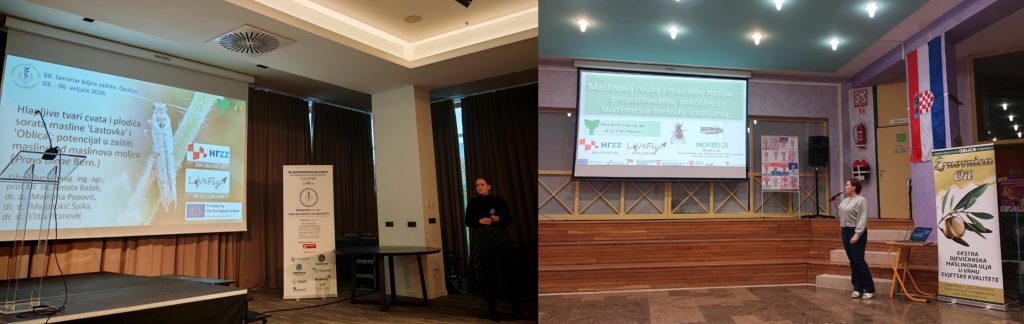
• The General Assembly of the Oblica Olive Growers Association in Žrnovnica, delivering a lecture titled “Olive Fruit Fly and Olive Moth – Identification, Monitoring, and Modern Control Methods.”
• The 68th Croatian Plant Protection Conference in Opatija (Feb 3–6, 2026), where together with Renata Bažok, Marijana Popović, Maja Jukić Špika, and Elda Vitanović, she presented the paper “Volatile Compounds of Olive Cultivars ‘Lastovka’ and ‘Oblica’ Inflorescences and Fruitlets: Potential in Olive Moth (Prays oleae Bern.) Control.”
👩‍🔬 Natalija Bulaš presented the project at:

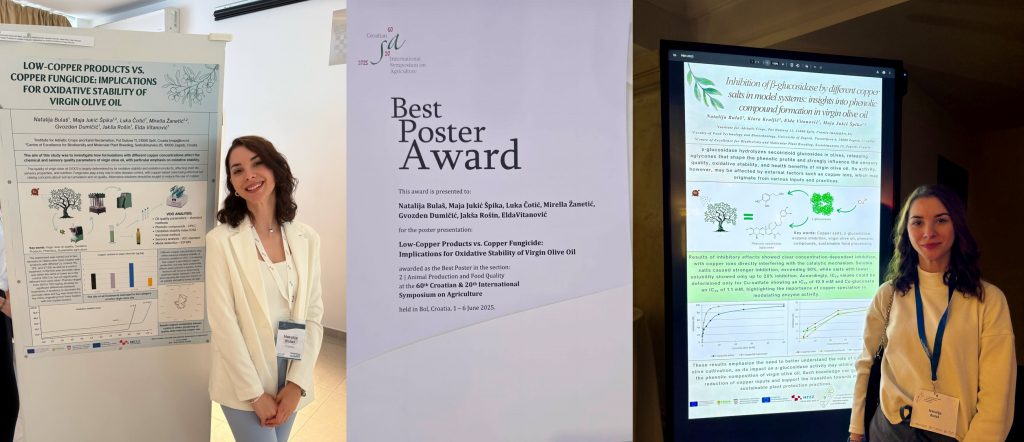
• The 11th International Congress of Food Technologists, Biotechnologists and Nutritionists in Zagreb (Dec 9–11, 2025), with the poster “Inhibition of β-Glucosidase by Different Copper Salts in Model Systems: Insights into Phenolic Compound Formation in Virgin Olive Oil.” #PRIMASafeH2OFarm #DOK_NPOO_2023-10-2561
• The 60th Croatian and 20th International Symposium on Agriculture in Bol (June 1–6, 2025), presenting a poster on the impact of low-copper alternatives on the oxidative stability of virgin olive oil, which received the Best Poster Award. #PRIMASafeH2OFarm #DOK_NPOO_2023-10-2561
👨‍🔬 Luka Čotić participated in:

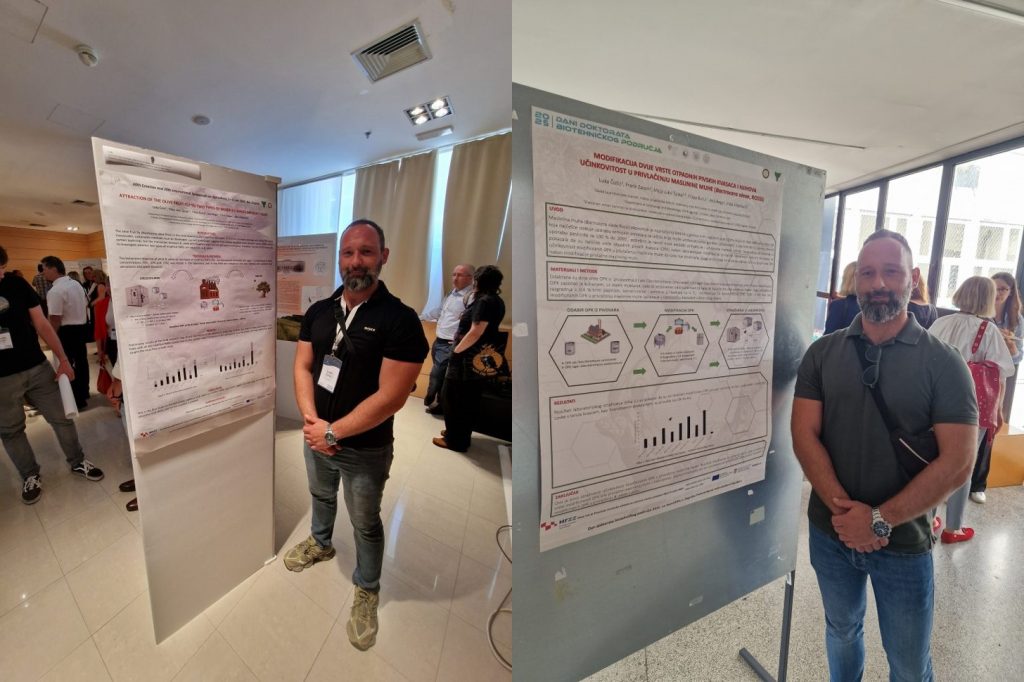
• The 60th Croatian and 20th International Symposium on Agriculture, presenting the paper “Attraction of the Olive Fruit Fly to Two Types of Modified Waste Brewer’s Yeast.” #DOK-NPOO-2023-10-7422 #HRZZ-IP-2022-10-9643
• The PhD Day of the Biotechnical Sciences in Zagreb (Sept 11–12, 2025), with the paper “Modification of Two Types of Waste Brewer’s Yeast and Their Effectiveness in Attracting the Olive Fruit Fly (Bactrocera oleae Rossi).” #DOK-NPOO-2023-10-7422 #HRZZ-IP-2022-10-9643
💡 All these appearances and presentations demonstrate our team’s active contribution to the scientific community and the olive sector, while reaffirming the project’s commitment to promoting, among other goals, sustainable plant protection methods and olive oil quality.

#INOMED-2I #OliveOilScience #SustainableAgriculture #FoodTechnology #EarlyCareerResearchers
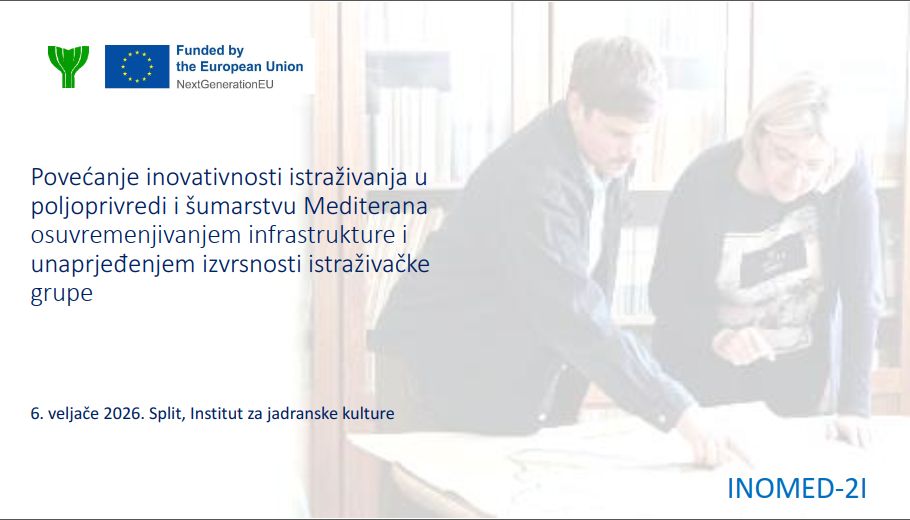
Path to a New Instrument! 🌱

At the Institute’s hall on Friday, February 6, 2026, the INOMED-2I project meeting was held 🏛️.

During the meeting, the achieved goals and indicators of the second year of the project were presented, and activities for the third year were planned. Special attention was given to planning the procurement of a new instrument, which is crucial for further research activities and improving outcomes in projects related to agriculture and horticulture 🔬.

The meeting facilitated coordination within the research group and defined the steps that will ensure the continued development of research infrastructure and the achievement of the project’s key indicators.

#INOMED2I #Research #Innovation #Agriculture #Horticulture #InstrumentProcurement

How Tomato Responds to Magnesium Deficiency: Growth and Nutrient Uptake 🔬

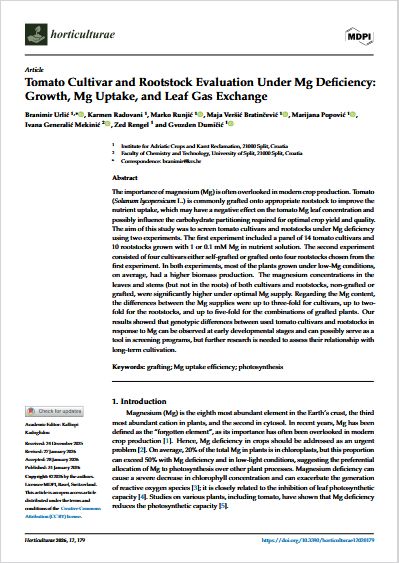
A new scientific paper, “Tomato Cultivar and Rootstock Evaluation Under Mg Deficiency: Growth, Mg Uptake, and Leaf Gas Exchange”, has been published, highlighting the importance of magnesium (Mg) – an element often overlooked in modern agriculture. The research was conducted as part of the InToMag project, under the supervision of Dr. Branimir Urlić, analyzing how different tomato cultivars and rootstocks respond to magnesium deficiency, with a focus on plant growth, Mg uptake, and leaf gas exchange 🌱. Part of the analyses that contributed to the conclusions was carried out thanks to the instrument procured through the INOMED-2I project.

The results showed that differences among genotypes were visible already in the early stages of development, which can help in the faster identification of more resilient plants. Most plants grown under low Mg conditions had higher biomass, while magnesium concentrations in leaves and stems were higher under optimal Mg supply. Significant differences were also observed in total Mg content between cultivars, rootstocks, and grafted combinations.

These findings suggest that the selection of appropriate rootstock–scion combinations can be an important tool in breeding programs 🌍. However, further research is needed to assess their impact on long-term cultivation.

You can read more about the full study here: https://www.mdpi.com/2311-7524/12/2/179

#INOMED2I #InToMag #science #research #agriculture #tomato #magnesium #plantScience #projects #innovation

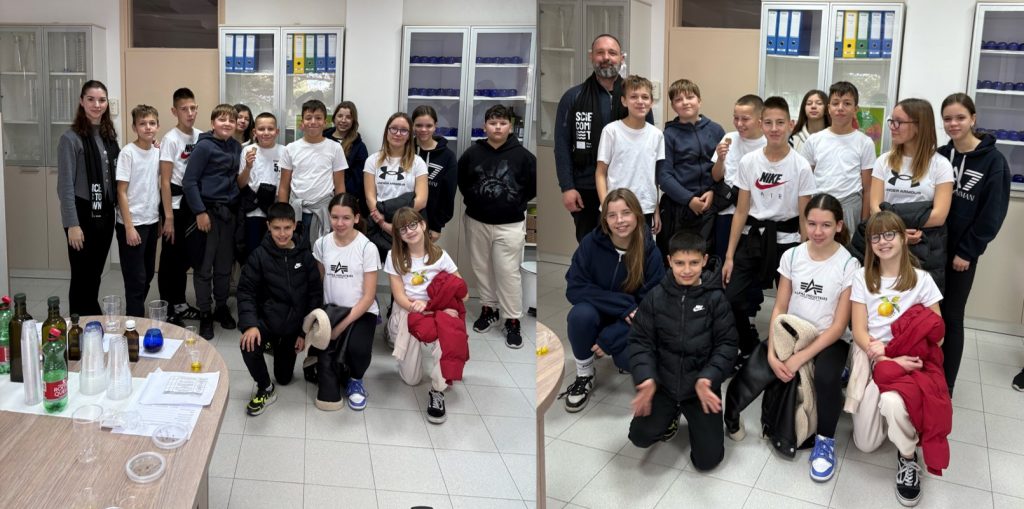
6th Grade Students from OŠ Pazdigrad Visit Olive Groves and Laboratory

Our now young scientists and researchers had the opportunity to peek into the magical world of olives and olive oil 🫒. On January 31, 2026, we had the honor of hosting the 6th-grade students from OŠ Pazdigrad! Upon arrival, they first toured our olive groves, and then stepped into the Laboratory for Food Technology and Olive Oil Analytics, where they could see how the quality of their favorite liquid gold is scientifically monitored and ensured 🔬💛. #INOMED-2I

Assistant Luka introduced them through an engaging conversation to the olive fruit fly and ecological ways of protecting olive trees, showing how much knowledge, patience, and love goes into every drop of premium extra virgin olive oil, #BeerBy-4-OliveFly (IP-2022-10-9643) 🌱🪶

Finally, under the expert guidance of Assistant Natalija, the students participated in a sensory analysis and tasting of olive oil 👃👅. There was laughter, amazed looks, and delight – a true little gastronomic adventure! #PRIMA Safe-H2O-Farm

Thank you all for your visit, and we look forward to more gatherings and research! 🫒💫

OliveOil #SchoolVisit #ScienceIsFun #SensoryAnalysis #EcologicalProduction #YoungResearchers #DOK_NPOO_2023-10-2561 #DOK_NPOO_2023-10-7422

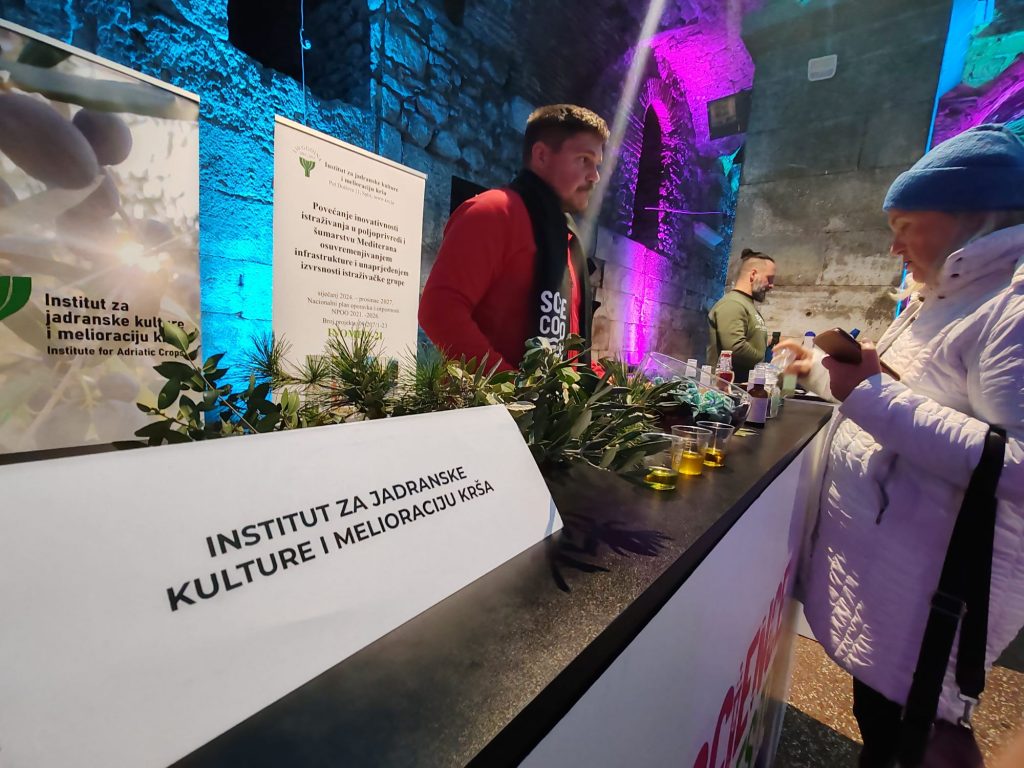
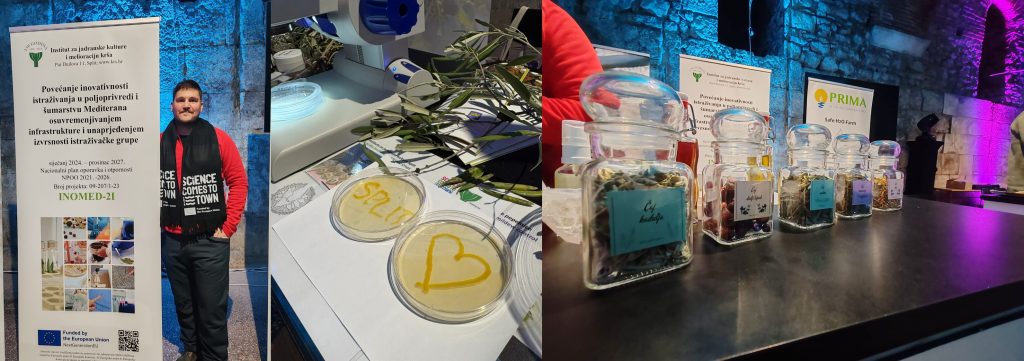
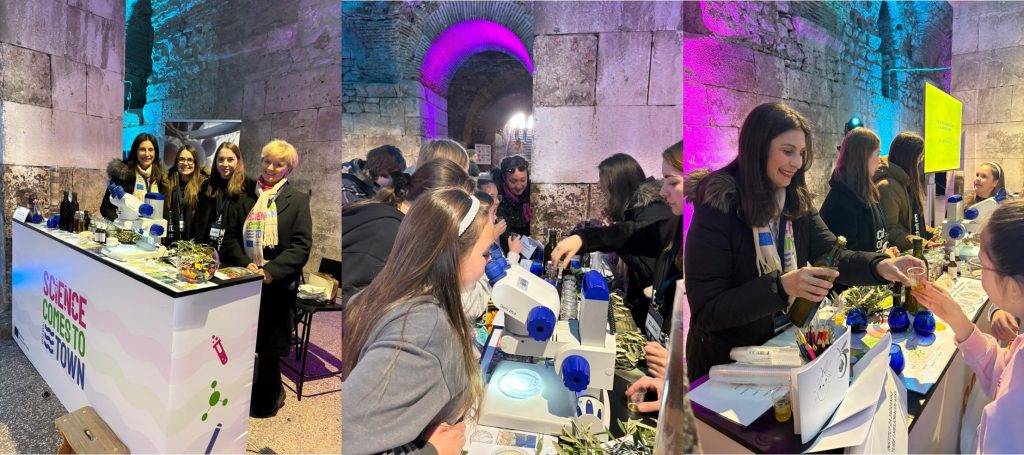
✨Meeting of Heritage and Science. Science comes to town.

That feeling and desire for science to be yours and mine – actually everyone’s – is most easily realized when we bring it out of the laboratory and the field, showing how fascinating, accessible, and important it can be for everyday life. That is why, within the main program held from January 20 to 24, we chose the unique setting of Diocletian’s Cellars as the central place for our activities.

Thousands of students and citizens had the opportunity to explore sustainable development and environmental protection in a completely new way, while together we promoted European identity through science and laid the foundations for long-term partnerships in our city.

🔬 Science Comes To Town (SCTT) is a leading European project connecting three cities – Kiel, Brest, and Split – with more than 70 associated partners. Through 365 days of a diverse program, including science festivals, workshops, competitions, and informational events, the project strengthens the connection between science and society. Special emphasis is placed on sustainable development, environmental protection, preservation of cultural and natural heritage, and inspiring young and future scientists, while simultaneously promoting a shared European identity.

The Institute of Adriatic Cultures, in collaboration with the City of Split, the University of Split, and numerous partner institutions, will actively participate in the implementation of the program throughout the year. Our team places particular emphasis on the research and preservation of the Mediterranean landscape, sustainable agriculture, karst area management, and the valorization of plant and genetic resources.

✨The results of the INOMED-2I, PRIMA Safe-H2O-Farm, PRIMA Tool4MEDLife projects, as well as the HRZZ projects BeerBy-4-OliveFly (IP-2022-10-9643) and InTomMag (IP-2022-10-7260), have been transformed into knowledge, data, and innovative ideas that we develop and study daily within these projects – and they were presented through the workshops you had the chance to attend.

Through stories, games, fun, and experiments, you were guided by our scientists: Ivan, Mate, Karmen, Maja, Luka, Katarina, Manuel, Mirella, Maja, and Marijana, as well as HRZZ PhD students Natalija (DOK_NPOO_2023-10-2561) and Luka (DOK_NPOO_2023-10-7422).

“Thank you to everyone who joined us – we look forward to future gatherings and exploring science together! 👋✨”

ScienceInTheCity #ScienceComesToTown #Split2026 #SCTT2026 #INOMED #InstituteForAdriaticCropsAndKarstReclamation #IJK #Mediterranean #SustainableDevelopment

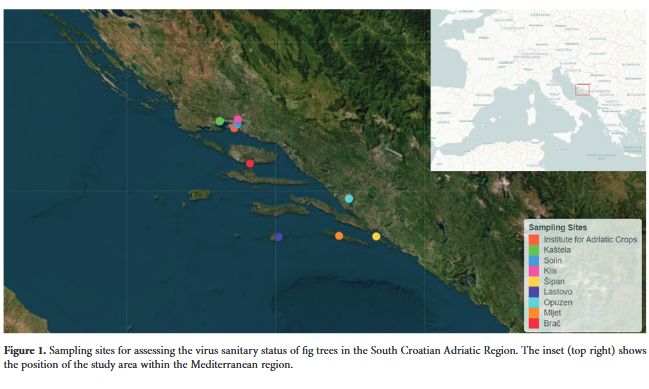
Scientific Insights into the Health of Fig Trees in South Croatian Adriatic Region

🌿 In the newly published scientific paper “Prevalence and phylogeny of fig viruses in the South Croatian Adriatic Region”, authors Mate Čarija, Katarina Hančević, Tomislav Radić, Emanuel Gaši, and Mira Radunić presented a study focused on the prevalence and phylogeny of fig tree viruses (Ficus carica L.) in the southern Croatian Adriatic region.

🔬 Within the framework of the INOMED-2I project and the Croatian National Program for Conservation and Sustainable Use of Plant Genetic Resources for Food and Agriculture 2021–2027 (01-181/2-17), 28 fig genotypes were analyzed using molecular methods (RT-PCR) to determine the presence of major viral pathogens and their genetic relationships with isolates from other Mediterranean regions. 📊 The results showed a high frequency of viral infections, with Fig Badnavirus 1 (FBV-1) detected in all samples, while other viruses (FMV, FLMaV-1, FFkaV, and FMMaV) were present at varying proportions. Most trees were infected with multiple viruses simultaneously.

🌱 Phylogenetic analysis revealed a close relationship between the detected isolates and viruses present in other Mediterranean regions, contributing to improved knowledge of phytopathogens important for Mediterranean fruit cultivation. The results provide a scientific basis for future monitoring and protection activities of agricultural crops in the region.

📎 More information about the paper is available here.

New Liquid Chromatographic System in the Second Year of the Project

n the second year of project implementation, a liquid chromatograph equipped with a diode array detector (DAD) and a fluorescence detector was acquired, further enhancing the Institute’s analytical infrastructure 📊🔬

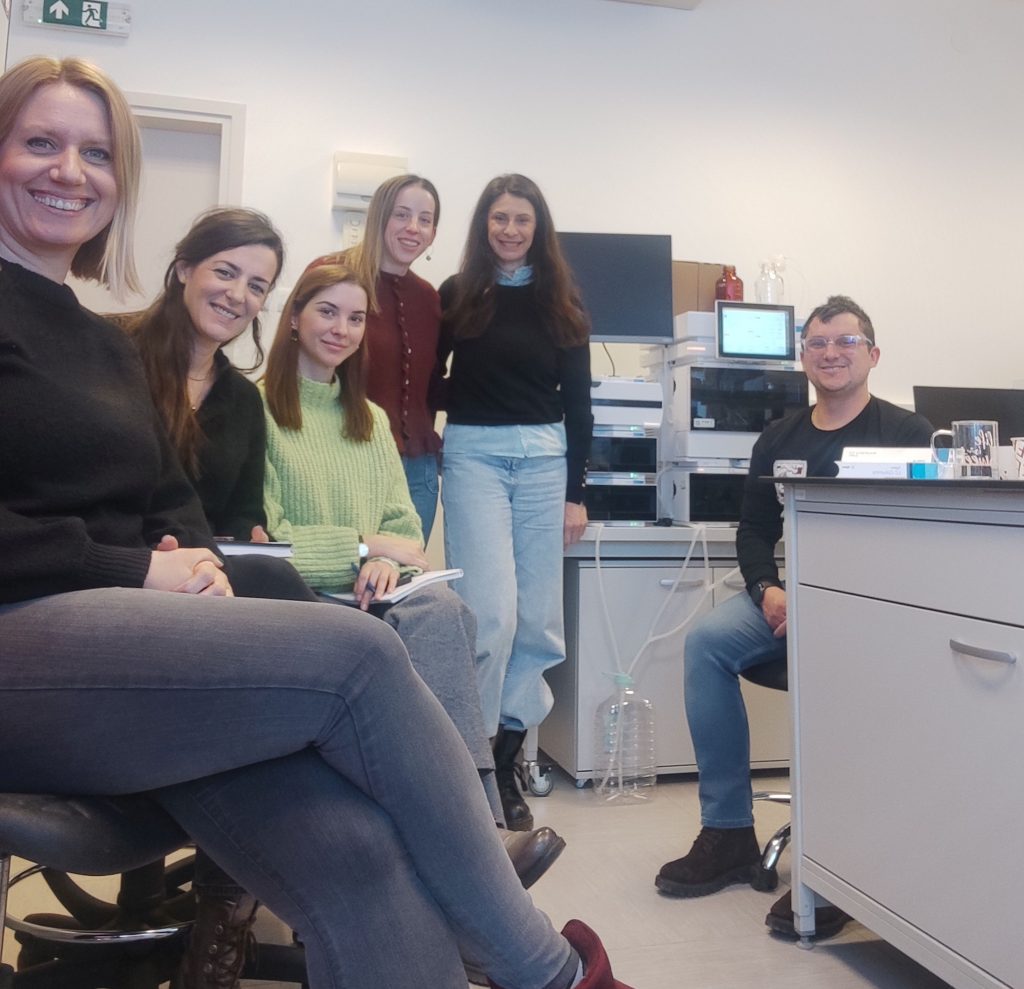
Members of the project team successfully completed professional training for operation of the system, which took place from 1 to 5 December 2025. The training was attended by Ana Boban, Natalija Bulaš, Maja Veršić Bratinčević, Marijana Popović, and Maja Jukić Špika 👩‍🔬👩‍🔬

The HPLC system equipped with DAD and fluorescence detection enables highly sensitive and selective analysis of a wide range of compounds, particularly phenolic compounds, pigments, vitamins, and other bioactive components 🌿🧪. Its application will significantly contribute to the implementation of planned research through precise identification and quantification of target compounds in plant and food samples.

The acquisition of this instrument represents an important step in strengthening the project’s experimental capacities and opens new opportunities for obtaining high-quality and comparable analytical data in the continuation of the research 📈.

How microclimate affects pomegranate properties: A study from the East Adriatic Coast

🎉New paper published in Agriculture: 📃”Microclimate Condition Influence on the Physicochemical Properties and Antioxidant Activity of Pomegranate (Punica granatum L.): A Case Study of the East Adriatic Coast” by Mira Radunić, Maja Jukić Špika, Jelena Gadze, Smiljana Goreta Ban, Juan Carlos Díaz Pérez & Dan MacLean.

This study aims to fill this gap by investigating how different microclimatic conditions affect the physical, chemical, and antioxidant properties of ‘Barski slatki’ pomegranates, the predominant local cultivar on the eastern Adriatic coast. Understanding these microclimatic interactions is essential not only for improving cultivation practices and postharvest handling, but also for advancing varietal selection and increasing the market potential of fruit destined for both fresh consumption and value-added processing.

👉Read it here: https://lnkd.in/dmsX6puf: https://www.mdpi.com/2077-0472/15/21/2210

#pomegranate #meteorologicalfactors #climatechange #fruitsize #anthocyanin #phenolics #antioxidantactivity #superfruit #fruitquality #INOMED

🍇🔬🧫 Indigenous yeasts from Dalmatia – the key to unique wines?

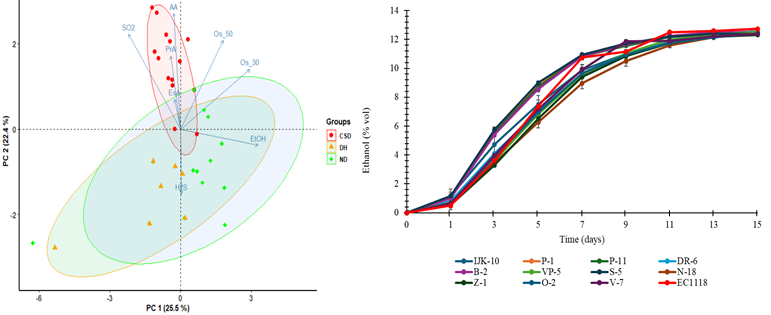
The scientific paper “Unlocking the potential of indigenous Saccharomyces cerevisiae from Maraština grapes for use as starter cultures in the winemaking process”, published in the journal Applied Food Research (Elsevier, Q1, IF: 6.2), was funded as part of the INOMED-2I project (09-207/1-23), which is supported by the European Union’s NextGenerationEU fund.

In this latest study, 117 indigenous Saccharomyces cerevisiae strains were isolated and thoroughly analyzed from spontaneous fermentations of Maraština grape must obtained from three subregions of Dalmatia.

Why is this important?

In the world of winemaking, the concept of microbial terroir is gaining recognition – the idea that native microbiota, as well as soil and climate, contribute to a wine’s identity. These indigenous yeast strains therefore have great potential as starter cultures for wine fermentation.

💡 Key findings of the study:

  • Strains from Central and Southern Dalmatia (CSD) showed high tolerance to sulfur dioxide and high sugar levels, as well as lower production of undesirable compounds such as H₂S and acetic acid.
  • Strains from Northern Dalmatia (ND) were more resistant to higher alcohol concentrations, but showed lower aromatic potential.
  • Eleven of the most promising isolates were selected for further testing – all successfully completed fermentation within 15 days.
  • Compared to the commercial strain EC 1118, the indigenous strains showed a more complex aroma profile, mainly due to increased ester production (associated with fruity and floral notes).

This research confirms that indigenous yeast strains reflect the unique characteristics of their home region and their use can support the production of authentic and distinctive wines. Such an approach promotes sustainability, biodiversity and the preservation of regional wine identity.

🔗 More details available at the link:
https://www.sciencedirect.com/science/article/pii/S2772502225004500

#IndigenousYeasts #Terroir #SaccharomycesCerevisiae #INOMED2I #Science

Public procurement – liquid chromatograph

The Institute for Adriatic Crops and Karst Reclamation is conducting a public procurement procedure for the purchase of a liquid chromatograph.

On July 3, 2025, the notice of public procurement on the above subject was published – LINK for access: https://eojn.hr/tender-ca/8609

The criteria for the qualitative selection of the economic operator, the criteria for the selection of the tender, general information on the procurement procedure and instructions for tenderers are available at the link EJON.hr.

The deadline for submitting bids is July 25, 2025 at 12:00:00.